
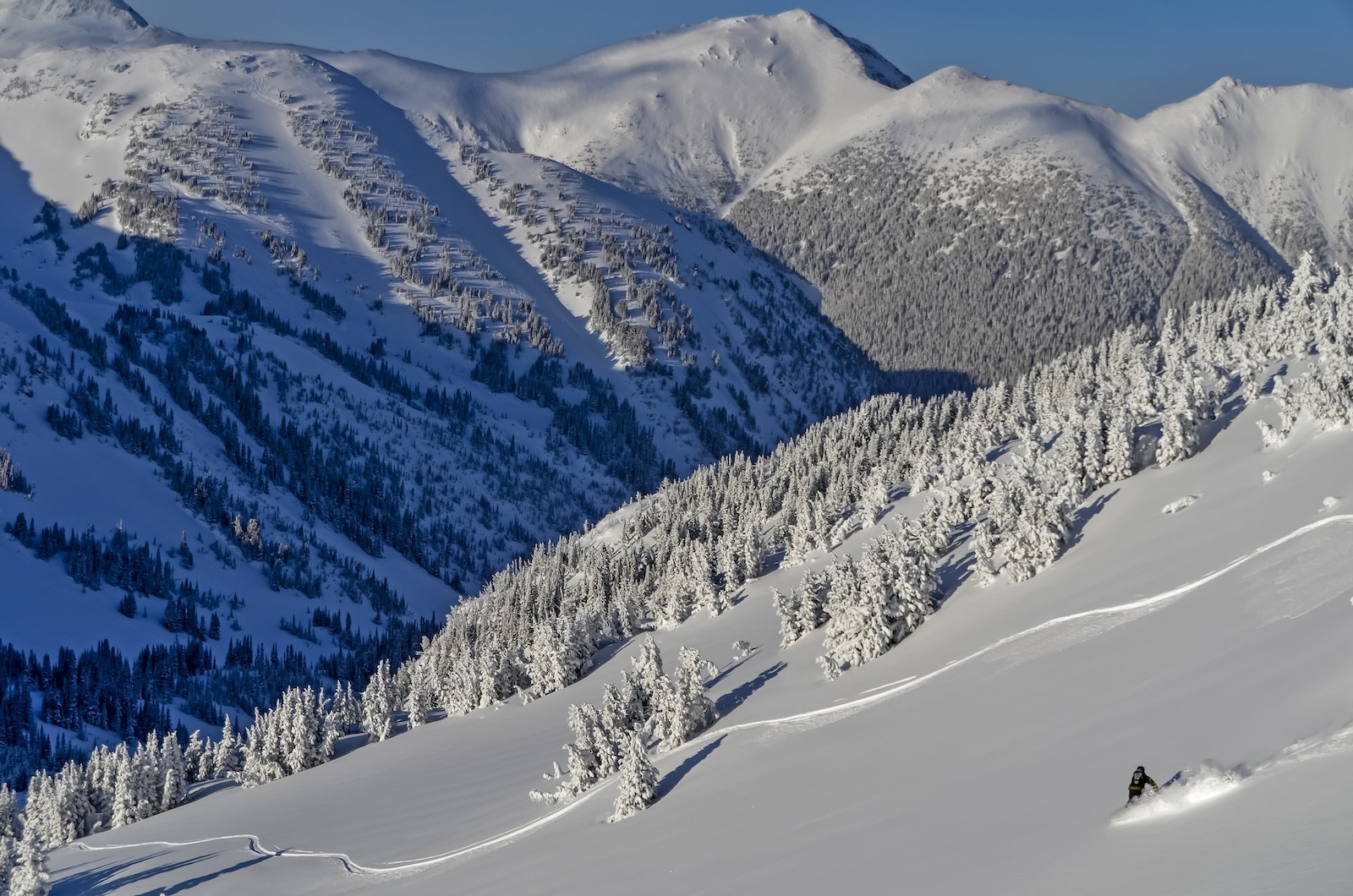
After ten years of organizing heli-skiing trips in British Columbia, we know them inside and out. Here they all are in one place, answered without any brochure filtering.
The people who contact us aren't indecisive. They're passionate skiers, often experienced, who have wanted to go for a long time, sometimes a very long time. But between wanting to go and actually booking, there's a threshold. And that threshold is made up of questions, doubts, and "what ifs."
After ten years of answering these messages, we know them by heart. Here are the ten most frequently asked questions and our unfiltered answers.
📋 Summary
- "Am I good enough?"
- "Are you really sure?"
- "What if the weather is bad all week?"
- "I'm more of a snowboarder, is that possible?"
- "Is it really worth the price?"
- "How do I know which lodge to choose?"
- "Do I need to train before I leave?"
- "What if I get injured on the very first day?"
- "Can we go as a couple if we're not at the same skill level?"
- "I'm 55 years old. Is this still for me?"
01 — “Am I good enough?”
That's the number one question. By far.
The honest answer: probably yes — if you ski regularly, are comfortable on black runs off-piste and have already skied in powder, even occasionally.
Heli-skiing in Canada isn't a competition. It's not reserved for athletes or professional guides. It's accessible to any serious skier with genuine mountain proficiency. Lodges group skiers by skill level from the very first briefing, and your guide adapts the terrain to your abilities—not to what they want you to be able to do.
What really matters: your level in powder (not on groomed slopes), your comfort on unmarked terrain, and your honesty about your level at the time of the briefing.
What doesn't matter: skiing fast, doing tricks, having skied in this or that resort.
💡 Our simple test: do you feel comfortable on an ungroomed black run at the end of the day, with cold snow and varied terrain? If so, you can consider heliskiing with a good entry-level lodge like the Bell 2.
02 — “Are you really sure?”
Yes — with the right operators and the right protocols.
Heliskiing in Canada is supervised by ACMG/IFMGA certified guides , the Canadian equivalent of a high-mountain guide certification. These professionals spend years training, then entire seasons accumulating precise knowledge of the terrain and snowpack in their concession area.
Each day begins with a rigorous avalanche risk assessment—snow pits, stability tests, and analysis of regional avalanche bulletins. Every drop-off follows a strict protocol. Each skier departs with a checked avalanche transceiver, probe, and shovel.
That said, the mountains are still mountains. Zero risk doesn't exist—whether heli-skiing, ski touring, or off-piste. What a professional setting does is reduce that risk to a very low level and manage abnormal situations with an efficiency you couldn't achieve on your own.
💡 The comparison that puts things into perspective: comparing guided heli-skiing to wild off-piste skiing is like comparing a commercial airliner flight to a car without a seatbelt. The perceived risk is the inverse of the actual risk.
To learn more: our complete guide to heli-skiing safety in Canada.
03 — “What if the weather is bad all week?”
It's a nightmare. A week of bad weather after investing so much — financially and emotionally.
The reality: serious operators have precise strategies to maximize ski days regardless of the weather.
Areas at different altitudes: when visibility is poor at higher altitudes, guides descend to find runs in the forest, where trees create natural landmarks and the powder is often protected from the wind.
The paradox of powder snow: overcast days often offer the best fresh snow. A good operator knows how to place groups in the right place at the right time.
Guaranteed elevation gain: some lodges guarantee a minimum amount of elevation gain over the week. If weather conditions prevent this from being achieved, compensation is offered.
💡 Our recommendation if you're worried about the weather: choose Northern Escape Heliskiing . Their ability to find good runs in bad weather is recognized by all operators in the region.
04 — “I’m more of a snowboarder. Is that possible?”
Yes, without restriction. Almost all the lodges in our selection welcome snowboarders in their groups.
Even better: the Canadian terrain is ideally suited to snowboarding. Deep powder on wide open slopes is exactly where riders progress fastest and have the most fun.
Some points of attention specific to snowboarders:
- Moving between runs on flat terrain can be less fluid than on skis — some riders prefer a splitboard style to facilitate transitions.
- A splitboard is generally not necessary as drops are always made by helicopter.
- Check that the lodge does indeed welcome riders when you book — this is the case for almost all of our selection.
05 — “Is it really worth the price?”
This is perhaps the most honest question on the list. And it deserves a precise answer, not a speech.
In terms of pure vertical drop: a day of heli-skiing represents between 8,000 and 15,000 meters of vertical descent. That's the equivalent of 15 to 25 days of intense downhill skiing at a resort. Over five days of skiing, you can accumulate more than 50,000 meters of vertical drop—in untouched powder, without queues, in mountain ranges otherwise inaccessible.
In terms of snow quality: British Columbia's light powder is an experience that even the best alpine resorts can't replicate. It's not a question of budget or altitude—it's a question of geography and climate.
In terms of experience density: a week of heli-skiing in Canada often represents more memorable experiences than ten seasons of resort skiing.
💡 The real indicator: skiers who do their first heli-skiing in Canada almost always come back. Statistically, this is the best answer to the question "is it worth the price?"
06 — “How do I know which lodge to choose?”
That's precisely why we exist. But here's a quick decision-making framework:
First time camping → Bell 2 Lodge . Impeccable logistics, accessible grounds, excellent support, best value for money.
You want weather security → Northern Escape . Their ability to find good runs in bad weather is widely recognized.
Looking for a geographical gem? → Bella Coola . The most impressive descents, in the most spectacular valleys.
You want raw adventure → Ripley Creek . Vastness, wildlife, uncompromising nature.
Combine with Whistler → Tyax Whistler . The only destination that allows you to combine heli-skiing and the largest resort in North America.
Looking for a private experience? → Stellar Heliskiing . Small groups, exceptional guidance, remarkable snow.
Looking for the ultimate experience? → Skeena . Canada's most exclusive experience.
For full details: our comparison of the 7 heliski lodges in Canada.
07 — "Do I need to train before leaving?"
Yes — and it's very often underestimated.
A day of heli-skiing involves descending between 8,000 and 15,000 meters of vertical drop. Five days at this pace represent a considerable physical effort. Skiers arriving unprepared are often exhausted by the third day—precisely when groups are starting to find their rhythm and really ski well.
The minimum program to follow in the 6 to 8 weeks prior to departure:
- Strengthening of the quadriceps and hamstrings (squats, lunges, leg press)
- Cardio workout: 3 sessions of 45 minutes per week (running, cycling, swimming)
- Proprioception and ankle stability (unstable plateau)
- At least one day of off-piste skiing in the preceding weeks to get the legs back in shape
It's not an absolute requirement — but customers who arrive prepared enjoy their week much more.
08 — “What if I get injured on the very first day?”
That's a legitimate question, and it needs to be answered honestly.
From a medical standpoint: the lodges are equipped with a fully stocked mountain pharmacy and a rapidly activated medical evacuation protocol. The helicopter, already on site, can be redirected for emergency evacuations. The guides are trained in first aid for remote environments.
From a financial perspective: an injury early in your stay is a difficult situation to manage without adequate insurance. Your insurance should cover:
- Medical expenses incurred while in Canada
- Emergency repatriation (minimum recommended limit: €300,000)
- Interruption of stay for medical reasons
- The practice of heliskiing is explicitly mentioned in the general terms and conditions
⚠️ Premium credit card insurance (Visa Infinite, Mastercard World Elite) may offer partial coverage — but the limits are often insufficient and heli-skiing is sometimes excluded. Check the terms and conditions before you go.
09 — "Can we go as a couple if we're not at the same level?"
Yes — it's actually a very common situation.
All good lodges form groups by ability level from the first briefing. Two skiers from the same couple but of different abilities will be placed in separate groups during the day, and will meet back at the lodge in the evening.
This system is perfectly honed. It is often an opportunity for the less advanced skier to progress spectacularly over the week - sometimes more than in several seasons of skiing at a resort - and for the more experienced to ski at their own pace without compromise.
💡 Private guiding option: Some lodges offer an exclusive guide for your couple or group. This makes it easier to mix skill levels if you'd like to ski together. Ask about this when booking.
10 — “I’m 55 years old. Is this still for me?”
This question is particularly important to us. And the answer is yes — without age restrictions.
Heli-skiing has no set age limit. Some of our best clients are over 60—and ski better than thirty-somethings in their group. What matters is physical fitness, technical skill, and overall health. Not the number on your ID card.
Specifically, what changes with age:
- Recovery is slower — plan for less intense days mid-week
- The natural caution that comes with experience is an asset in the mountains, not a hindrance.
💡 Our advice for a first time over 50: choose Bell 2 or Northern Escape (varied terrain, intensity adaptable day by day), be transparent with your guide from the initial briefing, and allow yourself the freedom to take a half-day of rest if your body demands it.
The best heli-skiing weeks we've organized aren't always those of the youngest groups.
A question that we haven't listed
After ten years, there remains one that people never explicitly ask about but that everyone wears:
"Will I regret not going sooner?"
The answer, according to what our customers tell us upon their return, is almost always the same.
→ Talk about my project with L'Or Blanc Travel
Article written by the L'Or Blanc Travel team · Canada heliskiing specialists for over 10 years · +33 6 16 70 90 65 · info@lorblanc-heliski.com